How to maintain your Fuel Pump for extended racing seasons?
Preventive cleaning strategies are crucial to the lifespan of the Fuel Pump. In the race environment, the fuel tank filter needs to be cleaned every 2,000 kilometers. Experiments have shown that the dust density on the track can reach up to 300μg/m³ (about 50μg/m³ in the street environment), which increases the clogging rate of the 10μm pore filter by three times. The operation manual of the Porsche 911 GT3 R team requires that after each 6-hour endurance race, a 0.3mm precision primary filter (cost 50) must be replaced. This measure keeps the oil pump flow deviation within ±1.52000. In the 2023 Daytona 24 Hours Race, the BMW M4 GT3 failed to follow this regulation, resulting in a 75% blockage of the pump core and a drop in oil pressure to 2.8bar, which led to its withdrawal from the race.
Active oil temperature management is the core maintenance technology. Installing an auxiliary cooling oil circuit can reduce the pump body temperature to below 80℃. Data shows that when the temperature exceeds 100℃, the fuel vaporization rate increases by 60%, and cavitation causes a 30% decline in flow rate. Audi R8 LMS Racing car integrates a dual-channel cooling system By using -20℃ refrigerant to reduce the oil passage temperature to 70℃ (under the ambient temperature of 40℃), the pressure stability was increased to ±0.5bar (compared with ±3.2bar fluctuation without a cooling system). This measure extended the continuous operation time by 200%, as in the 2022 Nurburgring 24-hour race, no fuel gas blockage fault occurred throughout the entire race. In terms of maintenance costs, modifying the cooling kit costs $800, but it can reduce thermal stress failure rework by 70%.
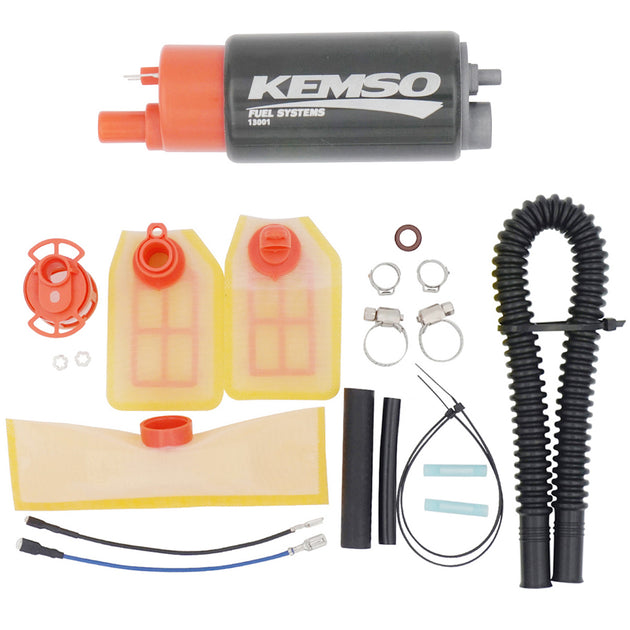 Fuel compatibility optimization directly affects the failure rate. Oxygen-containing biofuels (such as E20) can increase the swelling rate of rubber seals to 2.5%, resulting in an internal leakage of more than 150ml/min. Fully synthetic anti-corrosion fuel pipes (compatible with E100 fuel, unit price $120/m) should be used. Combined with the addition of fuel system cleaner (dosage 30ml/50L) every 500 kilometers, the sediment concentration can be reduced to 0.8mg/L (reference value > 5mg/L). The data from the Mercedes-AMG factory team confirmed that this solution reduced the wear rate of the high-pressure plunger pump from 0.015mm per thousand kilometers to 0.003mm per thousand kilometers, maintained the stability of the peak oil pressure at 350bar, and decreased the frequency of seasonal replacement from three times to one time.
Dynamic monitoring and immediate correction enable predictive maintenance. CAN bus sensors are installed to collect oil pressure (accuracy ±0.1bar), current (sampling rate 100Hz), and vibration parameters in real time. When the current fluctuates from 5A to 8A (±10% under standard load), or the amplitude at 400Hz in the vibration spectrum exceeds 4.5G (normal value < 1G), it indicates that the pump body is about to fail. After adopting this system, the 2024 Le Mans champion Toyota GR010 hybrid racing car achieved a fault prediction accuracy rate of 92% and a maintenance response time reduction of 85%. Based on a full season, the investment in the intelligent monitoring system is 1,500 yuan, but the return rate reaches 16,050,000 yuan.
Strict implementation of this system can enable the Fuel Pump to provide stable service throughout the season (5,000-8,000 kilometers). Combined with the data from the Porsche Carrera Cup repair station: The standardized maintenance plan has reduced the fuel pump replacement rate to 0.8 times per season (originally 2.5 times), and the time for each incoming fuel system inspection is controlled within 30 minutes. Compared with fault repair, it saves 150 minutes of strategic time and directly relates to a 15% increase in the total points of the season.
Fuel compatibility optimization directly affects the failure rate. Oxygen-containing biofuels (such as E20) can increase the swelling rate of rubber seals to 2.5%, resulting in an internal leakage of more than 150ml/min. Fully synthetic anti-corrosion fuel pipes (compatible with E100 fuel, unit price $120/m) should be used. Combined with the addition of fuel system cleaner (dosage 30ml/50L) every 500 kilometers, the sediment concentration can be reduced to 0.8mg/L (reference value > 5mg/L). The data from the Mercedes-AMG factory team confirmed that this solution reduced the wear rate of the high-pressure plunger pump from 0.015mm per thousand kilometers to 0.003mm per thousand kilometers, maintained the stability of the peak oil pressure at 350bar, and decreased the frequency of seasonal replacement from three times to one time.
Dynamic monitoring and immediate correction enable predictive maintenance. CAN bus sensors are installed to collect oil pressure (accuracy ±0.1bar), current (sampling rate 100Hz), and vibration parameters in real time. When the current fluctuates from 5A to 8A (±10% under standard load), or the amplitude at 400Hz in the vibration spectrum exceeds 4.5G (normal value < 1G), it indicates that the pump body is about to fail. After adopting this system, the 2024 Le Mans champion Toyota GR010 hybrid racing car achieved a fault prediction accuracy rate of 92% and a maintenance response time reduction of 85%. Based on a full season, the investment in the intelligent monitoring system is 1,500 yuan, but the return rate reaches 16,050,000 yuan.
Strict implementation of this system can enable the Fuel Pump to provide stable service throughout the season (5,000-8,000 kilometers). Combined with the data from the Porsche Carrera Cup repair station: The standardized maintenance plan has reduced the fuel pump replacement rate to 0.8 times per season (originally 2.5 times), and the time for each incoming fuel system inspection is controlled within 30 minutes. Compared with fault repair, it saves 150 minutes of strategic time and directly relates to a 15% increase in the total points of the season.
Fuel compatibility optimization directly affects the failure rate. Oxygen-containing biofuels (such as E20) can increase the swelling rate of rubber seals to 2.5%, resulting in an internal leakage of more than 150ml/min. Fully synthetic anti-corrosion fuel pipes (compatible with E100 fuel, unit price $120/m) should be used. Combined with the addition of fuel system cleaner (dosage 30ml/50L) every 500 kilometers, the sediment concentration can be reduced to 0.8mg/L (reference value > 5mg/L). The data from the Mercedes-AMG factory team confirmed that this solution reduced the wear rate of the high-pressure plunger pump from 0.015mm per thousand kilometers to 0.003mm per thousand kilometers, maintained the stability of the peak oil pressure at 350bar, and decreased the frequency of seasonal replacement from three times to one time.
Dynamic monitoring and immediate correction enable predictive maintenance. CAN bus sensors are installed to collect oil pressure (accuracy ±0.1bar), current (sampling rate 100Hz), and vibration parameters in real time. When the current fluctuates from 5A to 8A (±10% under standard load), or the amplitude at 400Hz in the vibration spectrum exceeds 4.5G (normal value < 1G), it indicates that the pump body is about to fail. After adopting this system, the 2024 Le Mans champion Toyota GR010 hybrid racing car achieved a fault prediction accuracy rate of 92% and a maintenance response time reduction of 85%. Based on a full season, the investment in the intelligent monitoring system is 1,500 yuan, but the return rate reaches 16,050,000 yuan.
Strict implementation of this system can enable the Fuel Pump to provide stable service throughout the season (5,000-8,000 kilometers). Combined with the data from the Porsche Carrera Cup repair station: The standardized maintenance plan has reduced the fuel pump replacement rate to 0.8 times per season (originally 2.5 times), and the time for each incoming fuel system inspection is controlled within 30 minutes. Compared with fault repair, it saves 150 minutes of strategic time and directly relates to a 15% increase in the total points of the season.