A Closer Look at Comparing ceramic tile grades for a project
Comparing ceramic tile grades for a project starts with where and how the tile will be installed. Buyers should define the exposure and performance needs, ask which classification and test methods support supplier claims, and compare the same product details across quotations. Samples, technical documents, packaging, batch identification, and approval records then connect the selected tile to the delivered order.
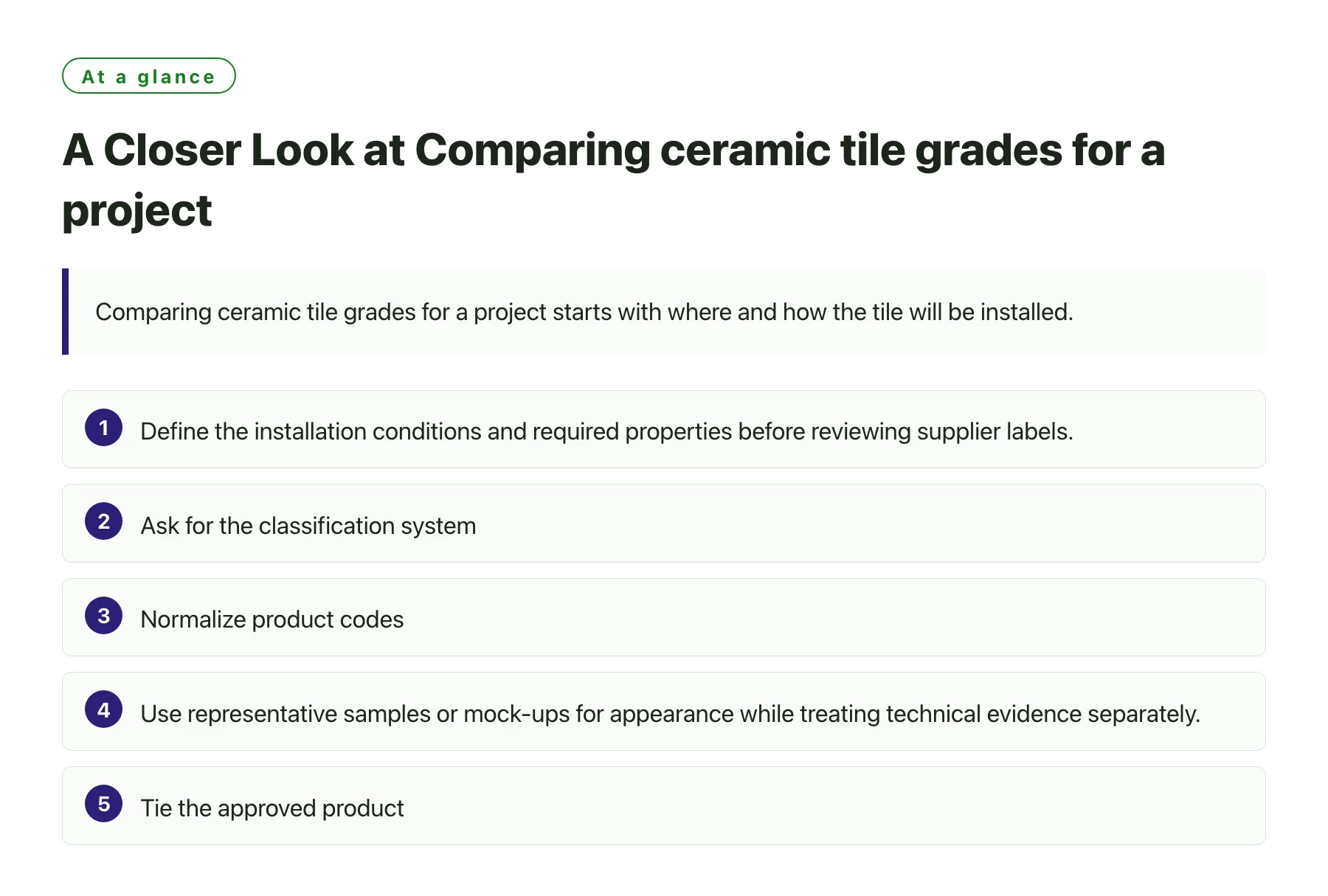
Key takeaways
- Define the installation conditions and required properties before reviewing supplier labels.
- Ask for the classification system, test method, and evidence behind grade claims.
- Normalize product codes, quantities, packaging, freight assumptions, and exclusions.
- Use representative samples or mock-ups for appearance while treating technical evidence separately.
- Tie the approved product, batch, and acceptance criteria to the purchase order.
A tile grade is meaningful only in relation to a named system and a measured property. Buyers should avoid comparing informal labels and instead document what the project needs and what each supplier can evidence. The following checkpoints make that comparison easier to review.
Start with the installed use, not the showroom label
A tile comparison should begin with the location and expected service conditions. A wall finish, a dry interior floor, an entry exposed to tracked water, and an outdoor surface place different demands on the product and installation. Record whether the area is wet, subject to freeze-thaw conditions, exposed to chemicals, or expected to carry concentrated traffic. The design team or specifier should translate those conditions into required properties and installation details.
Identify the tile body, surface, edge, color range, dimensions, thickness, and finish. A product name or collection label is not enough to compare two offers. Ask for the manufacturer’s product code, technical sheet, intended applications, and the test or standard behind every claimed classification. Keep face appearance and performance requirements separate so an aesthetic preference does not accidentally substitute for a technical criterion.
State the order’s shade, caliber, and variation expectations. Ceramic products can have visual variation and manufacturing tolerances; a mock-up or approved sample board helps the project team decide what range is acceptable. Record the exact items reviewed, lighting conditions if appearance matters, grout width, and the responsible approver.
Understand what a grade or category actually measures
Ask which classification system and edition the seller is using. Standards can organize tile by manufacturing method, water absorption, dimensions, surface properties, or other characteristics. A grade word used informally by a supplier may not map to a tested category. The buyer should request the defined property and evidence rather than infer performance from a broad label such as premium, commercial, or porcelain.
The Tile Council of North America explains that porcelain tile is defined by a water absorption rate of 0.5% or less measured using ASTM C373, and describes independent certification as a way to support the claim.[1] This threshold addresses a specific material classification; it does not by itself establish slip resistance, suitability for every installation, or the performance of an entire floor assembly. Check the project specification and have a qualified professional evaluate the intended use.
For properties that affect safety or durability, identify the relevant test method, result, and acceptable range. Do not compare numbers produced under different methods as though they were directly equivalent. If the technical data sheet omits a needed property, ask the manufacturer whether it is tested and what evidence can be shared.
Normalize supplier quotations and technical submittals
Use one schedule for every bidder. Include product code, size, thickness, finish, edge, quantity, unit, packaging, allowable shade mix, breakage allowance if the project specifies one, price basis, freight assumptions, lead time, and sample status. Request a deviation column with a written response for each requirement. This exposes substitutions that might otherwise be buried in a catalog description.
Check whether the quotation covers only tile or also trims, mosaics, stair pieces, special cuts, pallets, and protective packing. Confirm what is excluded and whether the delivery price is to a port, warehouse, jobsite, or other named point. Freight and handling can affect total cost and risk, especially when large-format pieces need different packaging or unloading arrangements.
Compare the offered quantity basis carefully. Suppliers may quote by piece, box, square meter, or square foot, and package coverage may depend on nominal dimensions and joint assumptions. Recalculate using the project’s approved measurement basis, then record rounding and overage assumptions. Keep the source values with the comparison to make the review auditable.
Review samples, mock-ups, and batch consistency
A sample helps teams see finish, color, texture, edge, and workmanship, but a single piece does not establish consistency across all cartons. Ask whether the sample is from the intended production run, an archive, or a special mock-up. Record its code, date, and relationship to the quoted product. If a project depends on appearance, inspect a representative panel or mock-up large enough to evaluate pattern repeat and visual variation.
Before approval, define the comparison conditions. View samples under lighting close to the installed environment, inspect multiple pieces, and compare dimensions and surface details using the agreed method. Separate acceptance of appearance from acceptance of technical data. If the team approves a range or a particular blend, document that decision with photographs and retained physical references.
For production, agree how shade and caliber are identified and sorted. Require carton labels that connect to product and production information, and request the supplier’s plan for keeping approved batches together. If substitutions or later production lots are expected, define whether a new sample review is required before the order is expanded.
Check packaging and transport risks for the tile format
Packaging needs depend on size, thickness, finish, edge treatment, and route. Specify carton protection, separators, palletization, moisture exposure limits if relevant, carton markings, and how fragile or oversized units will be handled. Review the unloading method and access at the destination. A delivery plan that assumes equipment the site lacks may create breakage or storage problems even when the tile itself meets specification.
Agree how damage will be counted and reported. Identify the condition of cartons on receipt, the evidence to retain, the reporting deadline, and who decides whether damaged stock is replaceable or usable for cuts. Record lot and carton identifiers before mixing boxes during installation. These records help distinguish transit damage from a product or installation issue.
Confirm production and shipment timing against construction milestones. Tile may need to arrive with matching trims or accessories. If a supplier proposes split shipments, state how shade consistency, storage, and later replenishment will be handled. The schedule should show when final quantity and approved product revisions are needed.
Connect technical approval with the purchase order
Attach the approved technical schedule, selected sample reference, and accepted quotation to the purchase order. Use the same product codes, revisions, units, and requirements across every document. State the order of precedence if a catalog, sample, quotation, and specification disagree. Resolve the conflict before production rather than leaving the factory to guess which item controls.
Assign owners for technical submittal review, regulatory or code questions, quantity confirmation, deviation approval, inspection, and final release. An importer or sourcing coordinator can collect documents and arrange checks, but the project’s qualified design or quality professional should decide whether the tile meets the project’s technical requirements. Record conditional approvals and close them before shipment.
For building-material supplier coordination, a buyer may consider building materials wholesale sourcing when organizing supplier communication and quotations. The service relationship should support a documented buying process; tile grade, application suitability, and acceptance criteria remain tied to the project’s specification and responsible reviewers.
Sources
Frequently asked questions
Does “porcelain” tell me that a tile is suitable for any floor?
No. The classification relates to a defined water-absorption criterion, while installation suitability depends on project conditions and additional properties. Check the project specification and get qualified review.
What should buyers request to compare ceramic tile grades?
Request product codes, the classification system and edition, test methods and results for relevant properties, dimensions, finish, shade and caliber information, packaging, and written exceptions against one shared specification.
Can a sample confirm that all cartons will match?
A sample supports appearance review but does not establish consistency across a full order. Record its production source and version, then agree batch identification, inspection, and replenishment controls.
Who should approve tile suitability for an installation?
The project’s qualified design, specification, or quality owner should assess the product against its intended use and applicable project requirements. A sourcing coordinator can help gather supplier evidence.